
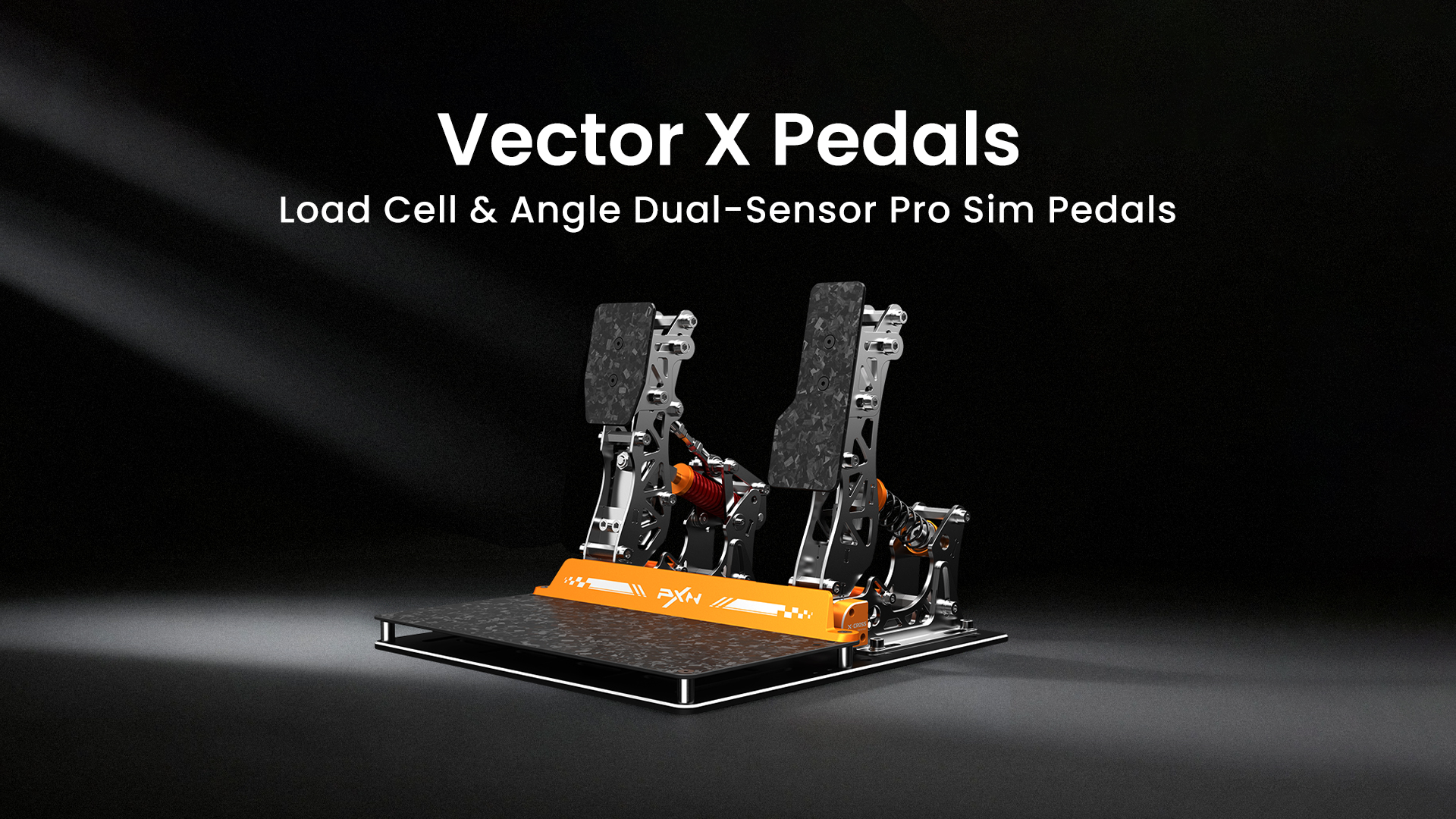
When people first get into sim racing, the steering wheel is usually the part of the setup that gets the most attention. It is the most visible piece of hardware, it feels exciting to upgrade, and it is often the first thing people associate with a “serious” racing rig.
But when it comes to improving lap times, consistency, and race performance, pedals are often the more important upgrade.
A better wheel can improve immersion and steering detail, but the biggest gains on track usually come from braking, throttle control, and repeatability. In sim racing, many lap time bottlenecks are not caused by steering angle, but by inconsistent braking points, poor brake pressure control, and difficulty managing traction when exiting corners.
Why Pedals Matter So Much
In almost every racing discipline, braking is one of the main areas where time is gained or lost. The ability to brake later, apply pressure consistently, and release the brake smoothly into a corner can make a bigger difference than many beginners expect.
This is especially true when it comes to trail braking, where the driver gradually releases brake pressure while turning into a corner. When trail breaking is done well, it helps rotate the car, keeps the tyres loaded correctly, and allows the driver to carry more speed through the entry phase. Done poorly, it can lead to understeer, lockups, instability, or simply lost time.
This is where the difference between entry-level pedals and more advanced pedal systems becomes clear.
Basic pedals often rely on potentiometers, which measure pedal travel rather than force. This can work for casual racing, but it does not always reflect the way real braking is managed. Load cell pedals, by contrast, measure pressure. That means the driver can build muscle memory around braking force rather than pedal position, making it easier to repeat the same braking input lap after lap. For sim racers contending for the top positions, that repeatability must become second nature.
Braking, Throttle, and Clutch: The Three Areas That Shape Performance
Braking may be the most obvious area where pedals affect lap time, but it is not the only one.
A precise throttle pedal is essential for corner exits. In high-powered cars, rear-wheel-drive machines, GT racing, rally, and drifting, small throttle inputs can make the difference between clean acceleration and losing traction. Smooth throttle control helps drivers manage wheelspin, stabilise the car, and get back on the power earlier.
The clutch also has a role to play in more specific racing scenarios. In manual transmission cars, race starts, drifting, and classic racing formats, a clear and accurate bite point helps drivers launch more consistently and control the car with greater confidence.
Together, braking, throttle, and clutch control influence a huge part of what happens on track. Steering matters, of course, but once a driver understands the racing line, much of the real performance gain comes from how confidently and consistently they can control weight transfer, braking pressure, and acceleration.
A Smarter Upgrade Path for Sim Racers
For beginners and intermediate drivers, the order of upgrades can make a big difference. It is easy to spend most of the budget on a more powerful wheelbase or a premium rim, only to continue using basic pedals that limit consistency.
A more balanced upgrade path usually looks something like this:
- Stage 1: Build a solid basic setup A direct drive wheelbase can provide better force feedback detail, smoother steering response, and a more realistic driving feel.
- Stage 2: Upgrade the core controls This is where load cell pedals become one of the most important improvements. A better steering wheel can also help, but pedal accuracy often has a more direct impact on lap time and consistency.
- Stage 3: Improve the seating position A proper seat and sim rig help create a stable driving position, which is essential when using heavier brake pressures.
- Stage 4: Add supporting accessories Shifters, handbrakes, button boxes, and other accessories can improve immersion and control, especially for rally, drifting, trucking, or more specialised racing disciplines.
For users working with a limited budget, prioritising pedals can often deliver a more noticeable performance improvement than upgrading the steering wheel rim alone. The reason is simple: better pedals help drivers brake more consistently, apply throttle more precisely, and build repeatable muscle memory.
Where the PXN Vector X Pedals Fit In
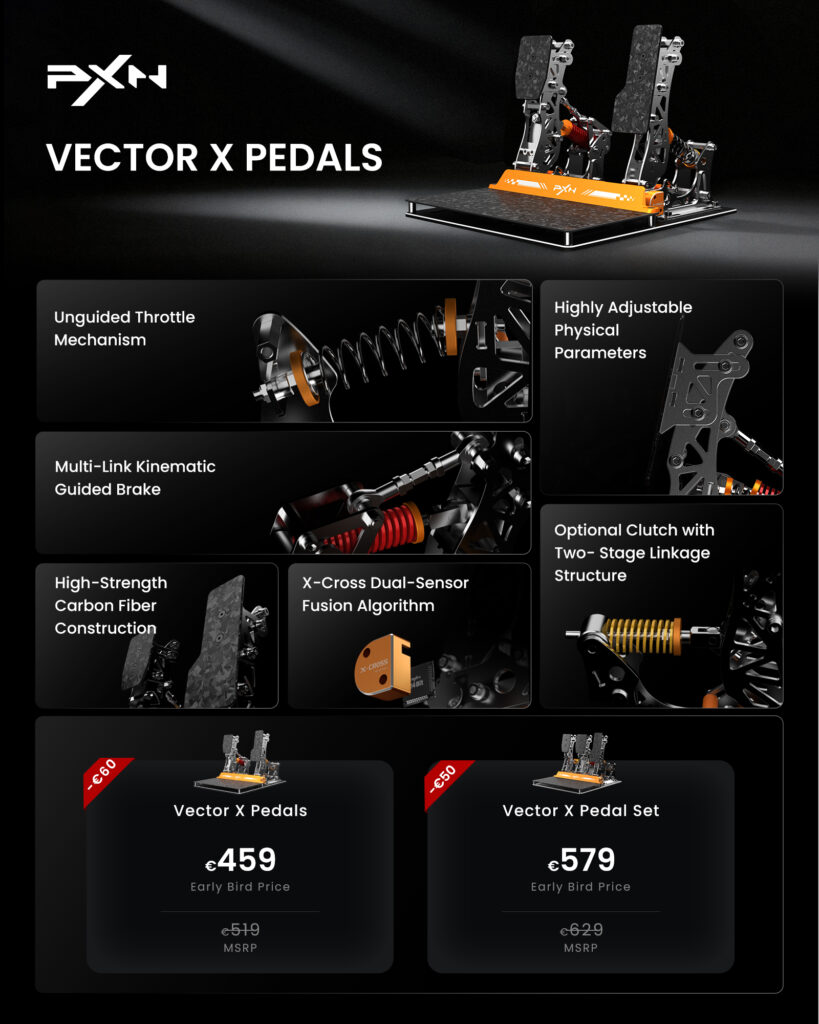
The PXN Vector X Pedals have been designed with this exact upgrade stage in mind. They are aimed at sim racers who want to move beyond basic pedal sets and step into a more precise, competition-focused setup without losing sight of value.
The standard Vector X configuration includes throttle and brake pedals, while an optional clutch pedal is available separately for users who want a full three-pedal layout. This makes the system flexible depending on the type of racing a player enjoys, from GT and formula-style racing to drifting, manual transmission cars, and more traditional driving setups.
At the centre of the system is a 200kg high-sensitivity brake load cell. This gives the brake pedal the pressure-based feedback that many sim racers look for when trying to improve consistency. Instead of relying only on pedal travel, the driver can train their braking around force, helping make braking points and trail braking inputs easier to repeat.
The throttle pedal is also a major part of the Vector X design. PXN uses its X-Cross dual-sensor system, combining a 15kg load cell with a high-precision Hall angle sensor. The aim is to reduce signal distortion and delay during rapid pedal inputs, helping drivers achieve smoother throttle application when accelerating out of corners or managing traction.
The optional clutch pedal adds a 30kg load cell and a mechanical structure designed to recreate a more realistic two-stage clutch feel. For drivers who use manual transmission cars or enjoy starts, drifting, and heel-and-toe techniques, that added feedback can make the experience feel more controlled and deliberate.
Built for Adjustment and Long-Term Use
One of the most important features of any serious pedal set is adjustability. Different drivers have different seating positions, braking styles, footwear, rigs, and preferences. A pedal set that feels right for one person may not suit another without adjustment.
The Vector X Pedals are built around that idea. Users can adjust pedal arm angle, pedal face position, pedal travel, pedal spacing, brake spring configuration, and brake force characteristics. This allows the pedals to be adapted to different driving styles, from shorter, firmer inputs to longer and more progressive pedal travel.
The construction also reflects the focus on durability. The Vector X Pedals use a laser-cut 304 stainless steel pedal body, a CNC-machined 6061 aluminum base plate, and carbon fiber pedal faces and heel rest. The result is a rigid full-metal and carbon fiber structure designed to reduce flex and maintain consistency under repeated heavy use.
Software tuning through PXN SimRacing adds another layer of control, including calibration, output curve adjustment, signal monitoring, dead zone settings, and throttle sensor mode switching. That means drivers can fine-tune both the mechanical and software side of the pedals to better match their preferred cars and racing disciplines.
The Bottom Line
For anyone trying to improve in sim racing, pedals deserve more attention than they often receive. A better steering wheel may make the experience feel more immersive, but better pedals can change how consistently a driver performs on track.
Braking accuracy, throttle control, and repeatable muscle memory all have a direct impact on lap time. That is why a load cell pedal set is often one of the most meaningful upgrades a sim racer can make after building a basic setup.
The PXN Vector X Pedals enter the market as a competition-grade option focused on precision, adjustability, and long-term stability. With a 200kg brake load cell, dual-sensor throttle system, optional load cell clutch, carbon fiber and metal construction, and detailed mechanical tuning options, they offer a strong upgrade path for drivers who want more control from their setup.
For sim racers looking to make their next upgrade count, pedals may be the smartest place to start.
Where to buy?
- Dual Pedals: https://shop.e-pxn.com/products/pxn-vector-x-pedals
- Clutch Pedal: https://shop.e-pxn.com/products/pxn-vector-x-clutch-pedal
- PXN Vector X Dual Pedals (Early Bird): $429, €459, £429
- PXN Vector X Dual + Clutch Pedal (Early Bird): $529, €579, £529